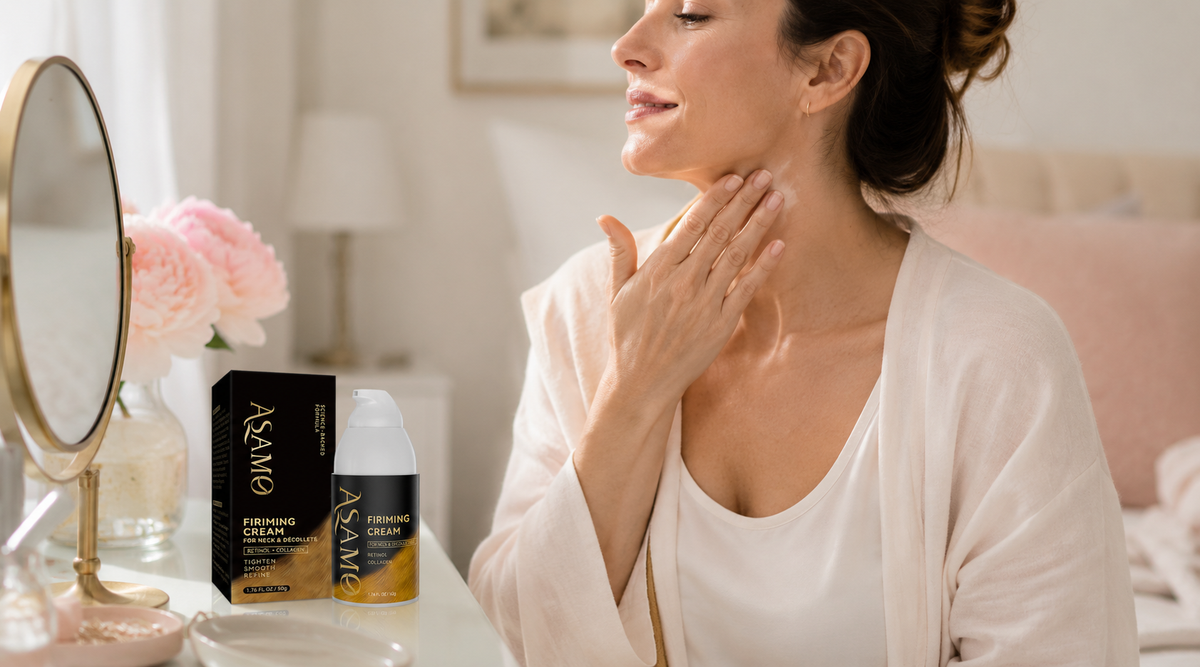
“Neck care sensitive skin” is a practical search topic. Most people are not only looking for a definition—they want to know how to choose a product, how much to use, where it belongs in a routine, and how to keep the experience comfortable.
Products used on sensitive-feeling skin should be followed exactly as labelled. If you experience persistent stinging, marked redness, swelling, or another concerning reaction, stop use and seek appropriate professional guidance.
This article focuses on everyday cosmetic use, texture, layering, comfort, hygiene, and label reading. It does not diagnose skin conditions or promise treatment, permanent change, or results within a fixed timeframe. Any ASAMO-specific statement should be reviewed against the final formula, directions, packaging, and finished-product testing materials.
Quick Answer
For sensitive-feeling skin, the most useful routine is usually simple: choose a product with a clear label, apply only to the intended area, start with a small amount, and keep other steps familiar while you assess comfort.
The goal is not to use the most products. It is to create a routine with clear steps, gentle application, and fewer variables. If discomfort persists or feels concerning, stop using the product rather than treating that reaction as a normal sign of performance.
Begin With the Product Label
A product label is more useful than a generic routine from social media. Before using a neck-care product, check:
-
The intended application area
-
Suggested frequency
-
Directions for use
-
Warnings and stop-use information
-
Whether the neck and upper chest are both included
-
Storage instructions
A product name such as “gentle,” “comforting,” or “for sensitive skin” does not replace the directions for that specific formula. Product names can describe positioning, but the label should guide how, where, and how often to use it.
For general cosmetic-safety principles, readers can consult the FDA’s guidance on using cosmetics safely. This guidance supports careful use, but it does not confirm the suitability or performance of a particular ASAMO product.
Keep the First Routine Short
When skin feels easily uncomfortable, a shorter routine makes it easier to understand what is happening. Start with only the steps you need.
A basic routine may be:
-
Clean hands.
-
Cleanse the intended area gently as appropriate.
-
Apply a small amount of neck cream according to the label.
-
Let the product settle.
-
Add only a familiar next step if needed.
Avoid adding a new cleanser, serum, cream, fragrance product, and sunscreen all at once. If you change everything, it becomes difficult to identify which step is affecting comfort or routine performance.
Start With the Smallest Suitable Amount
There is no universal amount for every neck cream. Pump output, tube openings, formula thickness, and the intended area all vary.
Start with the smallest label-permitted amount that can be spread in a thin, even layer over the neck or other approved area. More product may create sliding, pilling, transfer to clothing, or a finish that feels too heavy.
Apply with clean hands and use light strokes. Do not repeatedly rub the same area to make the cream “work harder.”
Apply Gently and Avoid Friction
The neck and upper chest are not areas that benefit from aggressive rubbing, pulling, or repeated massage. Use a light touch and allow the product to spread naturally.
If you notice stinging, burning, obvious swelling, marked redness, or another concerning reaction, do not interpret it as proof that the product is effective. Stop use, follow the product label, and seek professional guidance when symptoms are severe, persistent, or worrying.
Add One New Product at a Time
One of the simplest ways to make a routine easier to assess is to add only one new product at a time.
Keep familiar steps stable and observe practical details:
-
Does the product spread comfortably?
-
Does it feel different under clothing?
-
Does it pill with another layer?
-
Does the neck feel persistently uncomfortable afterward?
-
Is the routine easy to repeat without irritation from rubbing or over-layering?
This approach does not diagnose a reaction. It simply helps you make more informed routine adjustments.
Choose Texture for Comfort, Not for a “Strength” Ranking
Texture can strongly influence whether a product fits your routine. A lightweight lotion, gel-cream, cream, or richer balm-like texture may all feel different on the neck.
| Texture | May suit a routine when | What to remember |
|---|---|---|
| Lightweight lotion | You want a faster daytime finish | May feel easier under sunscreen or clothing |
| Gel-cream | You prefer a lighter, fresh surface feel | Texture alone does not prove performance |
| Cream | You prefer a more cushioned finish | Use a small amount to avoid heaviness |
| Richer texture | You prefer a more substantial evening layer | May need more time to settle |
A richer product is not automatically better, and a lighter texture is not automatically less useful. Choose based on the label, your routine timing, and everyday comfort.
A Simple Morning Version
Morning care should fit with sunscreen, clothing, commuting, and time. If the label allows morning use, keep the routine light and straightforward.
-
Cleanse the intended area as needed.
-
Apply a small amount of neck cream.
-
Wait until the surface is no longer visibly wet or moving.
-
Apply sunscreen according to its own label.
Sunscreen has its own instructions for amount, coverage, and reapplication. A neck cream is not sunscreen unless that specific product is labelled as one.
If the cream repeatedly pills under sunscreen, reduce the amount or simplify the layers before trying a more complicated routine.
A Simple Evening Version
Evening may make it easier to use a richer texture because there are fewer daytime products and less contact with makeup or sunscreen. The label still decides whether evening use is appropriate.
After cleansing, apply the neck cream to clean, dry skin if the directions say to do so. Avoid combining several unfamiliar products in the same evening routine.
A consistent, low-step routine is easier to observe and adjust than one that changes every night.
Do Not Focus on a Fixed Waiting Time
No single waiting time works for every formula, climate, amount, or next step. After applying neck cream, wait until the product is no longer noticeably wet, sliding, or overly slippery.
If you need to wait a long time before the next step, try using less product first. Reducing the amount is often more useful than adding more time or rubbing the product into the skin.
If Products Pill, Change One Variable
Pilling can be caused by the amount used, friction, formula texture, or how quickly layers are applied. It does not automatically mean a product is wrong for you.
Try one adjustment at a time:
| If you notice | Try this first |
|---|---|
| Product rolls or pills | Use less product |
| Product shifts under sunscreen | Let the first layer settle |
| Skin feels overloaded | Remove a duplicate step |
| Pilling after rubbing | Use lighter pressure and fewer strokes |
| Heavy feel during the day | Test a lighter amount or move the cream to evening if permitted |
Avoid changing every step at once. A single adjustment gives you clearer information.

Keep Skin Feel Separate From Product Claims
A cream can feel smooth, lightweight, cushioned, rich, cooling, or comfortable. These are useful descriptions of routine experience.
They are not, on their own, proof of a specific biological effect or a guaranteed long-term result.
It helps to keep three types of information separate:
-
What the label says
Intended area, directions, warnings, and ingredients. -
What a user can observe
Texture, finish, spreadability, packaging convenience, and how products layer. -
What needs finished-product support
Any detailed claim about the product’s performance.
This distinction helps readers choose based on clear information instead of relying on overly broad promises.
Read the Full Ingredient List
The INCI list can help consumers identify ingredients they prefer or would rather avoid. It does not usually reveal exact percentages, stability, delivery methods, or the complete final-product experience.
When evaluating neck care for sensitive-feeling skin, read the ingredient list alongside:
-
The intended area
-
Product directions
-
Packaging
-
Texture
-
Brand-provided finished-product information
Do not assume that a single highlighted ingredient makes a formula suitable for everyone.
Packaging and Hygiene Matter
Packaging affects how much product you use and how cleanly you can apply it.
Pumps and tubes can make it easier to begin with a controlled amount. Jars can also work when you use clean hands and close them promptly after use.
Keep the product hygienic:
-
Use clean hands before application.
-
Keep the opening and cap clean.
-
Close the package after each use.
-
Do not share personal skincare products.
-
Do not add water, saliva, or other cosmetics to change the texture.
If the product develops an unusual odor, color, or texture, do not try to dilute or repair it. Check the label or contact the brand.
Keep Storage Simple
Unless the label says otherwise, most cosmetics should be stored in a cool, dry place away from direct sunlight and sustained heat. A bathroom may be convenient, but repeated shifts in temperature and humidity can be less practical for long-term storage.
Keep the product in its original packaging whenever possible. The original pack holds important directions, ingredients, warnings, and batch information.
Reassess as Your Routine Changes
Travel, weather, clothing, sunscreen habits, and daily schedules can all change how a neck product feels in use. Reassessing does not mean replacing your whole routine.
Ask:
-
Is the amount still comfortable?
-
Does the current texture fit the season?
-
Is the product being used only on its labelled area?
-
Are there unnecessary repeat steps?
-
Would morning or evening be easier for this texture?
A small, thoughtful adjustment is usually easier to evaluate than a complete routine reset.
How ASAMO Can Include This Topic in Neck-Care Education
ASAMO can use this article as an educational entry point rather than a page that guarantees results. The content should first help readers understand labels, product texture, routine simplicity, amount, and stop-use considerations. Once product pages are confirmed, readers can be directed to the relevant collection or product label.
Any ASAMO-specific information about formula, product suitability, packaging, frequency, or performance should match the final label and finished-product testing materials.

A Practical Checklist
Before adding a neck-care product to a sensitive-feeling skin routine, check:
-
Is the intended area clearly stated?
-
Does the label give understandable directions and warnings?
-
Can you start with a small amount?
-
Does the texture fit your morning or evening routine?
-
Can you keep other products familiar at first?
-
Is the packaging easy to use cleanly?
-
Are product claims supported at the same level of detail as the wording?
If an important point is unclear, check the label or contact the brand before making assumptions.
Frequently Asked Questions
What is the short answer for neck care with sensitive-feeling skin?
Use a simple, label-led routine. Start with a small amount, introduce one new product at a time, and stop use if you experience persistent or concerning discomfort.
Should I use more cream if my neck feels dry?
Not automatically. Start with the smallest label-permitted amount that evenly covers the intended area. Using too much may create a heavy feel, pilling, or product transfer.
Can I use neck cream in the morning?
If the label allows it and the texture works with sunscreen and clothing, it can fit a morning routine. Follow sunscreen’s own directions for coverage and reapplication.
Is evening better for a richer cream?
Evening may be more convenient because there are fewer layers to manage, but the product label should determine whether that timing is appropriate.
How long should I wait before the next step?
Wait until the surface no longer appears overly wet or moving. There is no fixed number of minutes that applies to every formula and routine.
When should I stop using a neck-care product?
Stop use if the label directs you to do so, or if you experience persistent burning, marked redness, obvious swelling, or another concerning reaction. Seek professional guidance if symptoms are severe or persistent.

Takeaway
For sensitive-feeling skin, build a neck-care routine around clarity and comfort: a product with a clear label, a small amount, gentle application, and only one new variable at a time.
Do not treat stinging, burning, marked redness, or swelling as a normal sign of product performance. Stop use if discomfort is persistent or concerning. ASAMO should update product-specific wording only after the final formula, directions, packaging, testing materials, and collection URL are confirmed.
Share:
How to Choose Neck Care for Dry-Feeling Skin
Why Does Neck Cream Pill Near Clothing?