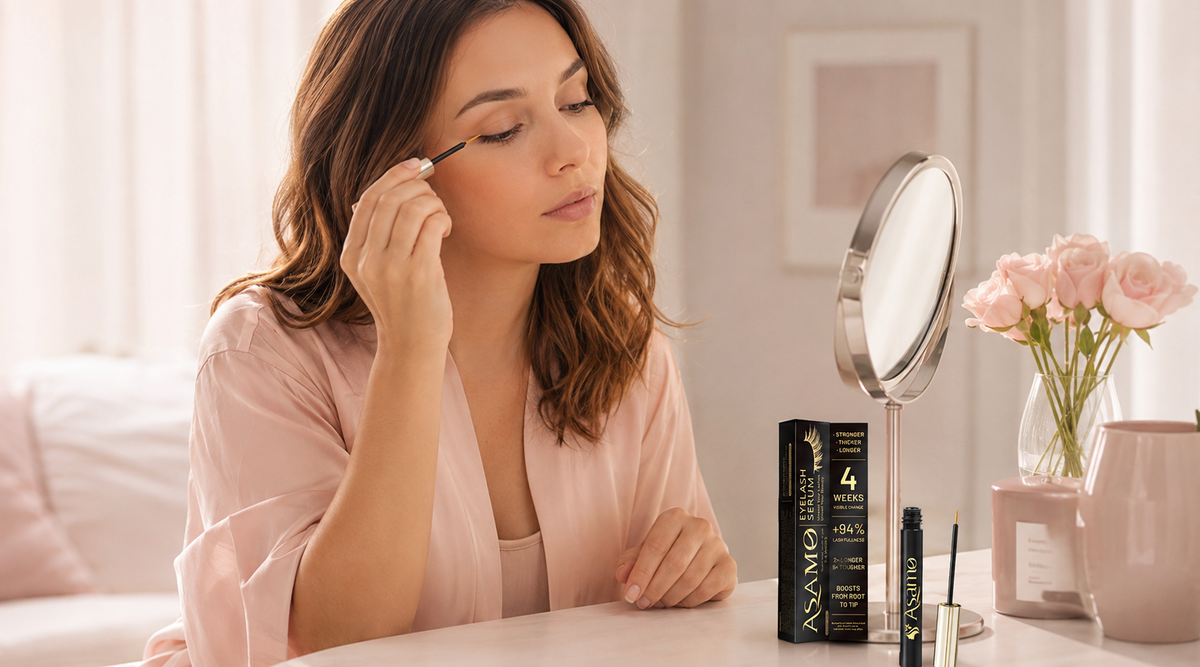
“Lash serum irritation—what should I do?” is an important question because lash serums are used close to the eyes. A product may feel different from person to person, but persistent stinging, burning, noticeable redness, swelling, eye symptoms, or another concerning reaction should not be treated as a normal sign that the product is working.
If discomfort occurs, stop using the product. Check the label for its specific directions and warnings. If symptoms are severe, persistent, involve the eye itself, or otherwise feel concerning, seek appropriate professional guidance.
This guide focuses on everyday cosmetic use, routine safety, hygiene, label reading, and practical next steps. It does not diagnose conditions or promise treatment, permanent change, or results within a fixed time. Any ASAMO product-specific statement should match the final formula, packaging, directions, and finished-product documentation.
Quick Answer: What Should You Do If Lash Serum Causes Irritation?
Stop using the lash serum.
Do not keep applying it to see whether the discomfort “goes away,” and do not treat burning, stinging, redness, swelling, or eye symptoms as proof that the product is working.
Check the product label for its warnings and instructions. If the product entered the eye, follow the product-specific directions and avoid rubbing the eye. If symptoms are severe, persistent, involve the eye itself, affect vision, or otherwise feel concerning, seek appropriate professional guidance promptly.
The FDA advises consumers to stop using eye cosmetics that cause irritation and to see a doctor if the irritation persists. Read the FDA’s Eye Cosmetic Safety guidance.
Do Not Explain Away Ongoing Discomfort
A product may have a lightweight feel, cooling sensation, or a texture that takes time to settle. Those normal product experiences are different from persistent or concerning discomfort.
Do not assume that these symptoms mean you need to use more product, apply it more frequently, or wait for an “adjustment period”:
-
Persistent stinging or burning
-
Noticeable redness
-
Swelling
-
Itching that does not settle
-
Eye discomfort
-
Unexpected tearing
-
A reaction that becomes worse after application
-
Any symptom that feels severe or unusual for you
If you are unsure whether an experience is concerning, the safer choice is to pause use and review the product label rather than continuing to experiment around the eye area.
Start With the Product Label
The product label should guide your next step.
Lash serums can vary in formula, intended application area, applicator, frequency, and warnings. When discomfort occurs, check:
-
The intended application area
-
Directions for use
-
Warnings and precautions
-
Instructions for accidental contact with the eye, if provided
-
Recommended frequency
-
Storage instructions
-
Expiration or period-after-opening information, where provided
Do not rely only on broad advice online. A specific product may have directions that are more relevant to its formula and packaging.
If general advice conflicts with the product label, follow the label.
Stop Using the Product Before Changing the Rest of Your Routine
When irritation happens, do not immediately add several new products in an attempt to “balance” the routine.
Adding eye cream, makeup remover, mascara, sunscreen, or other products at the same time can make it harder to understand what is causing discomfort. It can also lead to more rubbing and layering around a sensitive area.
A practical first step is to pause the lash serum and keep the rest of the routine simple.
Avoid:
-
Applying another layer of lash serum
-
Reapplying because the first layer felt uncomfortable
-
Mixing the serum with another product
-
Using more product to compensate for a missed application
-
Trying several new eye-area products at once
-
Treating the reaction as a cosmetic result
Once the area feels comfortable again, review the product label before deciding whether any further action is appropriate.
If Product Gets Into Your Eye
Lash serum should be used only in its intended application area and according to its label.
If product gets into your eye, do not rub your eye. Follow the product label’s accidental-contact instructions if they are provided. If you have persistent eye discomfort, significant redness, swelling, vision changes, or another concerning symptom, seek appropriate professional guidance promptly.
Do not use a home remedy, another cosmetic product, or a makeup tool to try to manage eye discomfort.
The eye area is not a place for trial and error.
Keep the Routine Gentle
The lash line and surrounding eye area are delicate. Avoid pulling, scrubbing, or repeatedly wiping the same area when discomfort occurs.
If you need to remove makeup before your normal lash serum routine, use your makeup remover according to its label and use light pressure. Do not aggressively scrub the lashes because you are concerned about product residue.
A gentle routine may include:
-
Pause use of the lash serum.
-
Avoid rubbing or touching the eye area unnecessarily.
-
Review the product label.
-
Keep other new products out of the routine for the moment.
-
Seek appropriate professional guidance if symptoms persist, become severe, or involve the eye itself.
The goal is not to diagnose the cause at home. The goal is to avoid making a concerning reaction worse through repeated application or friction.
Do Not Treat “Less Is More” as a Fix for an Active Reaction
Using a small amount is generally useful for routine control, but once you are experiencing irritation, do not simply use a smaller amount and continue.
Stop using the product first.
A smaller amount may help prevent excess product movement in a normal routine, but it does not make ongoing burning, swelling, redness, or eye symptoms something to ignore.
If you later decide to use any eye-area cosmetic again, do so only in line with its label and only when the area is comfortable. If you remain unsure, contact the brand or seek appropriate professional advice before using it again.
Check Packaging and Product Condition
A product’s condition matters.
Do not continue using lash serum if the packaging appears damaged, the cap no longer closes properly, the applicator appears contaminated, or the formula seems unusually changed.
Look for changes such as:
-
An unusual smell
-
A noticeable color change
-
An unexpected texture change
-
Leaking packaging
-
Cracked or damaged components
-
A brush or wand that appears visibly dirty
-
Product residue around the opening that does not look normal
Do not add water, saliva, makeup remover, alcohol, or another cosmetic product into the packaging. Do not attempt to alter the texture or “refresh” a product that appears abnormal.
If you are concerned about the product condition, stop using it and review the label or contact the brand.

Hygiene Still Matters
Good hygiene cannot guarantee that every product will feel comfortable for every person, but it is an important part of everyday eye-area cosmetic use.
Before applying a lash serum, wash and dry your hands. Keep the applicator clean, avoid touching it to makeup residue or unclean surfaces, close the product promptly, and do not share it.
The FDA advises consumers to wash hands before applying eye cosmetics, keep applicators clean, avoid sharing eye-area products, and stop use if irritation occurs. Read the FDA’s Eye Cosmetic Safety guidance.
Do not use lash serum when the eye itself is irritated or when the skin around the eye is inflamed. The FDA also advises avoiding eye cosmetics when there is an eye infection or inflammation around the eye, and waiting until the area has healed. Read the FDA’s Eye Cosmetic Safety guidance.
Keep Makeup and Lash Serum Separate When Needed
If you wear mascara, eyeliner, eyeshadow, or other eye makeup, do not apply lash serum over visible makeup residue unless the product label specifically directs it.
A practical evening routine, when allowed by the label, may be:
Remove eye makeup gently → Cleanse as appropriate → Wash hands → Apply lash serum according to the label → Let it settle → Store the product cleanly.
If the lash serum label allows morning use, it may be more practical to apply it on a clean intended area before mascara, then allow it to settle before moving on to makeup.
However, if you have experienced irritation, do not return to the product simply to make it fit into a morning or evening routine. Pause use first and follow the product label.
Separate Product Feel From Product Claims
A smooth texture, cooling sensation, lightweight finish, or comfortable routine can be useful personal observations. They are not proof that a product is working in a particular way.
The same is true in the opposite direction: discomfort is not proof of effectiveness.
It helps to separate:
-
What the product feels like
-
Whether it fits comfortably into your routine
-
What the product label says it is intended for
-
What finished-product evidence supports a specific claim
No cosmetic routine should encourage someone to ignore ongoing irritation in order to pursue a promised outcome.
Read the Full Ingredient List
An ingredient list can help you identify personal preferences or ingredients you may wish to avoid. However, it usually does not reveal exact percentages, formula stability, delivery method, or the complete performance of the finished formula.
When reviewing a lash serum after discomfort, consider the full picture:
-
The intended application area
-
The current product label
-
Directions and warnings
-
Applicator and packaging condition
-
Product texture
-
Ingredient list
-
Storage and hygiene
-
Other products used nearby
-
Whether multiple new products were introduced at once
A longer ingredient list does not automatically explain why discomfort happened. Avoid trying to diagnose a reaction based on one ingredient name alone.
Do Not Keep Testing the Product on a Sensitive Area
If a lash serum caused a concerning reaction, do not repeatedly test it close to the eye to see whether the same reaction happens again.
You may be tempted to change the amount, use a different routine order, apply it at a different time, or layer it with a different eye cream. These changes can make the situation harder to assess and may expose the sensitive area to more unnecessary product contact.
Instead:
-
Stop use.
-
Keep the routine simple.
-
Review the label.
-
Contact the brand if you need product-specific information.
-
Seek appropriate professional guidance for persistent, severe, or eye-related symptoms.
This approach is more responsible than trying to troubleshoot an active reaction through repeated application.
How to Include ASAMO Lash Care in a Comfortable Routine
ASAMO lash care should be part of a simple, label-led routine. It should never be presented as something consumers need to continue using through persistent discomfort.
Use ASAMO lash serum only in the intended area and according to the current product label. Use a small controlled amount, keep the applicator clean, and avoid layering several new eye-area products at once.
If discomfort occurs, stop using the product, check the label, and seek appropriate professional guidance when symptoms are persistent, severe, or involve the eye itself.
Everyday routine: Clean Hands → Apply a Small Amount as Directed → Let It Settle → Close Promptly → Store Cleanly.
If discomfort occurs: Pause Use → Check the Label → Avoid Reapplying → Seek Guidance if Symptoms Persist or Are Concerning.
【编辑提示:ASAMO Lash Care Collection 的正式 URL 发布后,再在本段和文章结尾添加真实集合页链接;当前不要创建空白或猜测链接。】

When to Seek Professional Guidance
Seek appropriate professional guidance promptly if symptoms are severe, persistent, involve the eye itself, affect vision, or otherwise feel concerning.
Do not rely on social media comments, product reviews, or generic beauty advice to assess a potentially serious eye-related symptom.
If you believe you had a bad reaction to an eye cosmetic, the FDA advises first contacting a healthcare provider. Read the FDA’s Eye Cosmetic Safety guidance.
Frequently Asked Questions
What should I do if lash serum stings?
Stop using it. Do not continue applying the product to see whether the sensation goes away. Check the label, and seek appropriate professional guidance if stinging persists, becomes severe, or involves the eye itself.
Is tingling a sign that lash serum is working?
No. Tingling, burning, or discomfort should not be treated as proof of effectiveness.
What if lash serum gets into my eye?
Do not rub your eye. Follow the product label’s accidental-contact instructions if provided. Seek appropriate professional guidance promptly if you have persistent eye discomfort, significant redness, swelling, vision changes, or another concerning symptom.
Should I try using a smaller amount after irritation?
Not while you are experiencing irritation. Stop using the product first. A smaller amount is not a reason to continue using a product that has caused a concerning reaction.
Can I use eye cream or makeup to cover irritation?
Avoid adding new products or extra layers around a sensitive area while it feels uncomfortable. Keep the routine simple and seek appropriate professional guidance if symptoms persist or are concerning.
Can I use lash serum if I have an eye infection or inflamed skin around my eye?
Avoid using eye cosmetics if you have an eye infection or inflamed skin around the eye. The FDA advises waiting until the area has healed. Read the FDA’s Eye Cosmetic Safety guidance.
What if the product looks or smells different?
Stop using it if the product appears abnormal. Do not add water, alcohol, makeup remover, or another product to change the formula. Review the label or contact the brand for guidance.
When should I seek professional guidance?
Seek guidance promptly if symptoms are severe, persistent, involve the eye itself, affect vision, or otherwise feel concerning.

Final Thoughts
If lash serum causes persistent or concerning discomfort, stop using it. Do not treat irritation as a required part of a beauty routine or as proof that a product is effective.
Follow the label, keep the applicator clean, avoid repeated testing around the eye area, and seek appropriate professional guidance when symptoms are persistent, severe, or involve the eye itself.
Share:
How to Keep a Lash Serum Applicator Clean
Should You Patch Test a Lash Care Product?