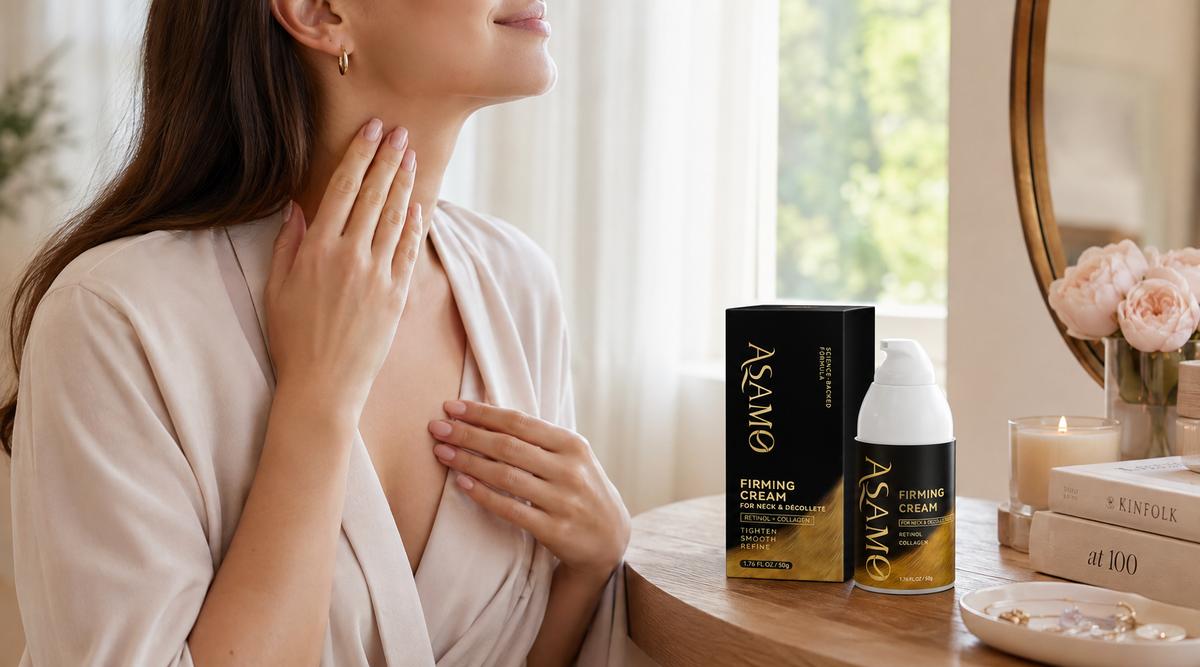
“Neck cream pilling” is a practical search topic. Most people are not only looking for a definition—they want to know why small rolls of product appear around the neck or collar, how to prevent them, and whether their routine order needs to change.
Pilling is commonly linked to using too much product, repeated layers, insufficient settling time, friction, clothing contact, or ignoring product directions. It is not proof that a product is “working” or “not working.”
This article focuses on everyday cosmetic use, texture, layering, comfort, hygiene, and label reading. It does not diagnose skin conditions or promise treatment, permanent change, or results within a fixed timeframe. Any ASAMO-specific statement should be reviewed against the final formula, directions, packaging, and finished-product testing materials.
Quick Answer
Neck cream may pill near the collar when too much product is applied, layers are repeated, products have not settled, or clothing creates friction. Start with the smallest suitable amount, use gentle application, allow the surface to settle, and change only one variable at a time.
A comfortable routine should place products on the correct labelled area, follow their directions, and work with your sunscreen, clothing, and daily schedule.
What Does “Pilling” Look Like?
Pilling is when a product forms visible little rolls, flakes, or soft pieces on the skin’s surface. It can happen while applying the product, when adding another layer, or after the neck rubs against a collar, scarf, hair, or fabric.
It is usually a routine-compatibility issue rather than a measure of product quality or performance.
The first question is not “Which product is bad?” It is: “Which part of the routine can I test first?”
Start With the Product Label
A neck cream label should guide where, when, and how often to use the product. Check:
-
The intended application area
-
Suggested amount or dispensing instructions
-
Recommended frequency
-
Whether the product is intended for morning, evening, or both
-
Any guidance about layering or sunscreen
A generic online routine cannot replace the directions for the formula in your hand.
For general cosmetic-safety principles, readers can consult the FDA’s guidance on using cosmetics safely. This general information does not verify the performance of a specific ASAMO product.
The Most Common Reason: Too Much Product
Using more neck cream than the skin can comfortably hold at the surface is a common reason for pilling. Excess product may stay mobile, collect around folds of skin, or roll when you touch the area or put on clothing.
There is no universal number of pumps or drops for every product. The package type, formula thickness, and intended area all matter.
Start with the smallest label-permitted amount that can be spread in a thin, even layer. If the neck still feels coated or visibly wet after application, using less at the next application is often the best first test.
More cream does not automatically create a better routine.
Product Texture Can Change How It Behaves
Lotions, gel-creams, creams, and richer textures can all behave differently under clothing and later skincare products.
| Texture situation | What may happen | First adjustment to test |
|---|---|---|
| Rich cream under a close collar | Fabric may create surface friction | Use a smaller amount or move to evening |
| Multiple creamy layers | Products may sit on top of each other | Remove a duplicate layer |
| Lightweight product applied heavily | Excess product may roll as it dries | Reduce the amount |
| Formula followed by immediate sunscreen | Layers may shift before settling | Give the first layer time to settle |
A richer texture is not automatically the problem. It may simply need a different amount, routine position, or clothing situation.
Clothing and Collar Friction Matter
The neck experiences more contact than many parts of the face. Shirt collars, scarves, jacket necklines, necklaces, hair, and even repeated touching can disturb the product film on the skin.
If pilling mainly appears near a collar, test these practical changes:
-
Apply less product around the areas that will touch fabric.
-
Let the cream settle before dressing.
-
Avoid repeatedly touching or rubbing the neck after application.
-
Use a lighter layer in the morning if the label permits.
-
Reserve a richer texture for an evening routine if that better fits the label and your comfort.
You do not need to stop using every product at once. Test one adjustment first.
Apply With Less Rubbing
The way a product is applied can contribute to pilling. Repeated circular rubbing, pulling, or trying to rapidly “work in” a cream can disturb the surface layer.
Use gentle, light strokes. Spread the product evenly, then allow it to settle. Do not keep rubbing once the cream is already distributed.
The neck is also not an area that benefits from aggressive pulling. A gentler method is more comfortable and gives the formula a better chance to settle evenly.
Give Layers Time to Settle
There is no universal waiting time for every formula, amount, temperature, humidity level, or later product. A practical signal is enough: wait until the product is no longer visibly wet, moving, or overly slippery.
If you apply sunscreen, another moisturizer, or makeup immediately over a neck cream, the layers may mix or roll before they settle.
If you have to wait an unusually long time, reduce the amount before adding more time to your routine. A thinner layer often settles more comfortably.
Avoid Repeating Similar Steps
A routine can become crowded when several products with similar textures are applied to the same area. For example, applying a serum, a cream, another cream, and sunscreen may create more layers than your neck needs.
When pilling occurs, ask:
-
Is there a duplicate moisturizing step?
-
Am I applying both a face product and a neck cream to the same area?
-
Is the product being reapplied unnecessarily?
-
Could a richer product move to the evening?
Simplifying the routine is often more useful than adding another product to solve the pilling.
Test One Variable at a Time
The clearest way to troubleshoot pilling is to change only one thing for several uses.
| Possible cause | One test to try |
|---|---|
| Too much product | Use a smaller amount |
| Friction from application | Use lighter pressure |
| Layers applied too quickly | Let each layer settle |
| Product overload | Remove one redundant layer |
| Collar contact | Dress after the product has settled |
| Morning routine feels too heavy | Test the product in the evening if allowed |
Do not change the product, amount, order, sunscreen, and clothing habit all at once. You will not know which adjustment made the difference.

Morning Routine: Keep It Light
Morning routines must work with sunscreen, clothing, and a schedule. If pilling happens during the day, use a minimal number of layers.
A simple morning order may be:
-
Cleanse the neck as needed.
-
Apply a small amount of neck cream as directed.
-
Wait until the surface settles.
-
Apply sunscreen according to its own label.
-
Dress after the products no longer appear wet or moving.
Sunscreen should follow its own directions for amount, coverage, and reapplication. A neck cream is not sunscreen unless the specific product is labelled as one.
Evening Routine: A Good Place to Test Richer Textures
Evening can be a useful time to test a richer-feeling neck cream because there is less contact with makeup, sunscreen, and daytime clothing. The product label should still determine whether evening use is appropriate.
After cleansing, apply a small amount with clean hands and keep the remaining steps familiar. Avoid introducing several new products in the same evening routine.
A shorter routine makes it easier to identify whether pilling is related to the product, the amount, or the surrounding layers.
Do Not Confuse Feel With Performance Claims
A silky, rich, smooth, or cushioned finish can make a neck cream enjoyable to use. These are valid texture observations, but they are not evidence of a specific biological effect.
Keep three kinds of information separate:
-
What the label says
Intended area, directions, warnings, and ingredients. -
What users can observe
Texture, amount, pilling, transfer to clothing, and layering comfort. -
What needs product-specific evidence
Any detailed claim about the finished product’s performance.
This approach keeps product education accurate and helps prevent routine problems from being interpreted as results.
Packaging, Hygiene, and Storage
Packaging can affect how easily you control the amount. Pumps and tubes may help you begin with a smaller, more consistent amount. Jars can also work when used with clean hands and closed promptly.
Keep the product clean and simple to use:
-
Use clean hands before application.
-
Keep the opening and cap clean.
-
Close the package promptly.
-
Do not share personal skincare products.
-
Do not add water or another cosmetic product to change the texture.
Unless the label says otherwise, store cosmetics in a cool, dry place away from direct sunlight and sustained heat. If the product develops an unusual odor, color, or texture, do not try to dilute or repair it—review the label or contact the brand.
How ASAMO Can Include This Topic in Neck-Care Education
ASAMO can use this article as an educational entry point. The content should help readers understand the role of amount, texture, routine order, and clothing contact before directing them to a product or collection page.
Any ASAMO-specific wording about formula, product use, packaging, or results should match the final product label and finished-product testing materials.

Frequently Asked Questions
What is the short answer about neck cream pilling?
Pilling is often caused by too much product, repeated layers, insufficient settling time, friction, or clothing contact. It is not proof that a product is working or failing.
Why does pilling happen mostly near my collar?
Collars, scarves, hair, and repeated touching create friction. Use less product near areas that contact fabric and allow the cream to settle before dressing.
Should I use more neck cream if it pills?
No. Start by using less. Excess product often makes surface rolling and transfer more likely.
How long should I wait before dressing?
There is no fixed number of minutes. Wait until the cream is no longer visibly wet, moving, or overly slippery.
Can I use neck cream before sunscreen?
If both product labels allow the routine, apply neck cream first, let it settle, then use sunscreen according to the sunscreen label.
When should I stop using a neck-care product?
Stop use if the label says to do so or if you experience persistent burning, marked redness, obvious swelling, or another concerning reaction. Seek professional guidance if symptoms are severe or persistent.

Takeaway
If neck cream pills near the collar, do not assume the product has failed. Start by reducing the amount, using lighter application, allowing the layer to settle, and testing one adjustment at a time.
A simple, label-led routine is easier to troubleshoot than a crowded one. ASAMO should update product-specific wording only after the final formula, directions, packaging, testing materials, and collection URL are confirmed.
Share:
How to Build a Simple Neck Care Routine for Sensitive-Feeling Skin
Do You Need to Massage Neck Cream In?