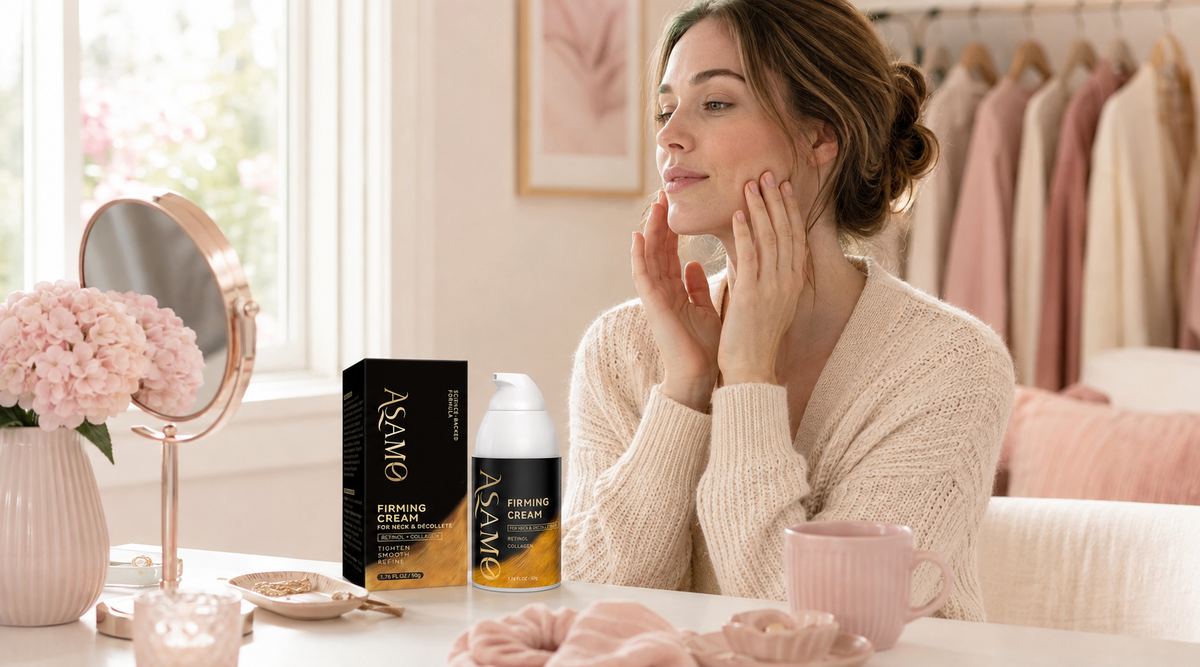
A “seasonal skincare routine” does not mean you need a completely new set of products every few months. A practical routine changes only when your current one no longer feels comfortable, layers well, or fits your daily environment.
The goal is not to add more steps. It is to keep each step clear, use products in a sensible order, and make the routine comfortable enough to maintain over time.
This guide focuses on everyday cosmetic use, product texture, layering, comfort, hygiene, and label reading. It does not diagnose skin conditions or promise treatment, permanent change, or fixed results. Any ASAMO product-specific wording should be updated only after the final formula, packaging, directions, and finished-product testing are confirmed.
Quick Answer
A seasonal skincare routine should not become more complicated just because the weather changes. Start by checking whether your current routine still feels comfortable, whether the amount is appropriate, and whether any steps have become repetitive or difficult to layer.
In warmer or more humid conditions, you may prefer fewer layers or a lighter amount. In drier indoor environments or colder weather, a more substantial familiar texture may feel more comfortable. These are routine adjustments, not proof that a product has become stronger, weaker, or necessary for everyone.
Start With Your Existing Routine
Before changing products, look at what you already use. You may only need to adjust the amount, timing, or number of layers.
Ask yourself:
-
Does the routine still feel comfortable from start to finish?
-
Does it pill under sunscreen or makeup?
-
Is one layer starting to feel too heavy?
-
Is a product now more comfortable in the evening than in the morning?
-
Are two products performing an overlapping role?
-
Is the product still being used according to its label?
A small adjustment is usually easier to evaluate than replacing everything at once.
Seasonal Changes Affect Feel, Not a Universal Skin Rule
Temperature, humidity, indoor heating, air conditioning, clothing, travel, and makeup habits can change how a product feels on the surface of the skin.
For example, a rich cream may feel comfortable in a dry indoor environment but too substantial during a humid commute. A lightweight gel may feel convenient in warm weather but may not be the texture you prefer during colder months.
These changes are personal and practical. They do not prove that one texture is objectively better, that everyone needs the same seasonal routine, or that a product changes the skin in a guaranteed way.
Review Product Labels First
The product label should guide intended area of use, application frequency, warnings, and storage. A product category name alone does not tell you whether a formula should be used more often, less often, in the morning, or at night.
Before making a seasonal adjustment, check:
-
Intended area of use
-
Suggested frequency
-
Daytime or nighttime directions, if provided
-
Warnings and avoidance areas
-
Storage directions
-
Whether the product is still within its recommended period after opening
When general online advice conflicts with the instructions for a specific product, follow the label.
The American Academy of Dermatology also provides general information about applying skincare products in order. Read the AAD’s skincare-order guidance here.
Adjust the Amount Before Buying Something New
A seasonal change does not always require a new formula. The same product may feel different simply because you are using too much or too little for the surrounding weather and routine.
Start with the smallest label-appropriate amount that spreads evenly over the intended area. There is no universal number of pumps, drops, or fingertip amounts because packaging varies.
| What you notice | First adjustment to test |
|---|---|
| The routine feels heavy in warm weather | Reduce the amount of one richer layer. |
| Products slide or pill | Use less and reduce repeated rubbing. |
| Makeup moves after skincare | Simplify the morning layers underneath it. |
| A product feels more substantial than you want in the daytime | Test it in the evening if its label allows. |
| Your routine feels incomplete after a weather change | Check whether a familiar moisturizer or texture can be adjusted before adding another product. |
Change one variable at a time. This helps you identify what actually improves comfort.
Texture Can Change the Way a Routine Feels
Texture is often more useful than a product category when planning a seasonal routine. Liquids, gels, lotions, creams, and balm-like products can all behave differently in changing weather.
| Texture | How it may feel in a routine | Practical seasonal consideration |
|---|---|---|
| Fluid | Quick to spread and often light | Use a small amount to avoid excess surface moisture. |
| Gel | Can feel fresh and light | Avoid overapplying or rubbing repeatedly as it settles. |
| Lotion | Often flexible between light and rich textures | May work well when you want a moderate finish. |
| Cream | May feel more substantial | Consider using a smaller amount or reserving it for evening if appropriate. |
| Balm-like texture | Can leave a noticeable final layer | Follow label directions and use only where it fits comfortably. |
“Lightweight” and “rich” describe use experience. They do not prove that one product is more effective or suitable for every person.
Keep Morning Skincare Practical
Morning skincare must work with sunscreen, makeup, clothing, travel, and the time you actually have. Seasonal changes can make a once-comfortable morning routine feel too layered.
A simple morning routine can include:
-
Cleanse or follow your usual morning cleansing approach.
-
Apply one familiar leave-on product, if you use one.
-
Add moisturizer if it is needed and layers comfortably.
-
Apply sunscreen according to its own label instructions.
If warmer conditions make the routine feel heavy, reduce the amount or remove a duplicated layer before skipping sunscreen. Sunscreen has its own directions for application, coverage, and reapplication. Do not mix it directly with moisturizer or another skincare product to create a shortcut.
Use Evening for Richer Textures When Appropriate
Evening may be a more practical time for a richer texture because makeup and daytime clothing are less likely to interfere. But a richer evening routine still needs to follow labels and remain simple enough to observe.
After cleansing, use familiar products in the intended areas. If a product feels too substantial beneath sunscreen or makeup during the day, consider whether it is more comfortable at night, provided its label allows this.
Do not add several unfamiliar products just because the season changes. A short evening routine can be more useful than a crowded one.
Avoid Fixed Waiting Times
Different products do not need the same waiting period. Formula, amount, humidity, temperature, and the next layer all influence how quickly a product settles.
Instead of following a fixed number of minutes, continue when the previous layer is:
-
Evenly spread
-
No longer visibly wet or running
-
Not moving excessively under your fingers
-
Comfortable enough for the next step
If you need to wait a long time to prevent pilling, reduce the amount or number of layers. Extra waiting is not always the most effective solution.
Understand Seasonal Pilling
Pilling is when products roll into tiny flakes or soft bits on the skin. It can become more noticeable when weather changes because a product’s surface feel may change with humidity, heat, cold, clothing friction, or different makeup habits.
Pilling usually relates to texture compatibility, excess amount, repeated rubbing, overlapping layers, or insufficient settling time. It is not proof that a product is activating or working more effectively.
| When pilling happens | What to test |
|---|---|
| After adding a richer layer | Use less or remove one overlapping product. |
| Under sunscreen in warm weather | Keep the skincare layers underneath lighter and apply gently. |
| Under makeup during a seasonal change | Use fewer morning layers and reduce tool friction. |
| Around the neck or hairline | Apply less in areas where clothing, scarves, or hair rub. |
| After changing several products at once | Return to a simpler routine and add back one step at a time. |
Introduce Seasonal Changes One at a Time
It is easy to change cleanser, moisturizer, makeup, sunscreen, and environment all at once when the season shifts. But this makes it hard to know which change actually made the routine more comfortable.
Use a simple process:
-
Keep your familiar routine stable.
-
Identify one practical issue, such as heaviness or pilling.
-
Choose one adjustment, such as using less moisturizer.
-
Observe the change over several uses.
-
Decide whether another adjustment is still necessary.
You do not need to document every detail. A simple note such as “lighter amount worked under makeup” or “richer texture better at night” can help you make clearer decisions.

Do Not Confuse Comfort With a Product Claim
A product may feel cool, smooth, soft, rich, or lightweight in a particular season. These are useful descriptions of product feel. They are not automatic evidence of a biological effect.
Cosmetic content can describe texture, finish, moisturizing feel, appearance, and routine compatibility. It should not turn seasonal comfort into claims about treating a condition, permanently changing skin structure, or guaranteeing a result.
This distinction is important for seasonal skincare. A comfortable routine may be easier to maintain, but comfort alone does not prove a particular product outcome.
Read the Full Formula, Not Only the Featured Ingredient
An INCI ingredient list can help you identify ingredients you prefer or wish to avoid. It does not usually reveal exact percentages, stability, delivery methods, or the finished product’s complete performance.
When considering whether a product fits your seasonal routine, look at:
-
The full ingredient list
-
Product directions and warnings
-
Intended use area
-
Packaging and dispensing method
-
Texture and finish
-
Compatibility with your existing routine
-
Evidence supporting specific product claims
A single featured ingredient or a long ingredient list does not automatically tell you whether a product is right for a particular season.
Packaging, Hygiene, and Storage Remain Important
Seasonal changes can affect storage conditions too. A product stored in direct sunlight, sustained heat, or a damp bathroom may not be handled as intended.
Keep product openings and applicators clean. Close packaging promptly, and avoid allowing droppers, brushes, or applicators to touch unclean surfaces. Do not add water, saliva, or another cosmetic product to alter texture.
Unless the label says otherwise, store cosmetics in a cool, dry location away from direct sunlight and prolonged heat. If a product develops an unusual odor, color, or texture, do not attempt to correct it by mixing it with something else.
Know When to Stop Using a Product
Do not treat persistent discomfort as a normal seasonal adjustment. Burning, persistent stinging, marked redness, obvious swelling, or eye symptoms are not evidence that a product is working.
Stop use if a product causes persistent or concerning discomfort. Cleanse or rinse as appropriate, review the label, and seek professional guidance when needed. If symptoms are severe or involve the eyes, seek timely professional help.
How ASAMO Can Fit Into a Seasonal Routine
ASAMO can use seasonal routine content as an educational resource rather than a reason to push a complete set of new products. The most useful message is that readers can reassess texture, amount, and timing while keeping product labels and comfort at the center.
Any ASAMO-specific statement should match the final formula, packaging, directions, and finished-product evidence. Do not add collection or product links until the destination page is live and verified.

Frequently Asked Questions
Do I need a completely new skincare routine every season?
No. Start by reassessing your current routine. A smaller amount, fewer layers, or moving a richer texture to the evening may be enough.
What should I change first when the weather changes?
First check comfort, amount, and texture. Change one variable at a time so you can tell whether the adjustment helps.
Should I use more skincare in colder weather?
Not automatically. Follow product labels and choose the amount and texture that feel comfortable in your routine. More product is not always better.
Can I use lighter textures in warm weather?
If the product label allows and the texture layers comfortably with your routine, a lighter-feeling product or smaller amount may be more practical in warm or humid conditions.
Why does my skincare pill during seasonal changes?
Humidity, temperature, richer layers, makeup, clothing friction, and changes in product amount can all affect pilling. Reduce the amount or number of layers and test one adjustment at a time.
Should sunscreen still be part of my seasonal routine?
Follow your sunscreen’s label for application, coverage, and reapplication. Seasonal changes do not replace product directions for sunscreen use.
When should I stop using a product?
Stop use if you experience persistent burning, marked redness, obvious swelling, eye symptoms, or another concerning reaction. Follow the label and seek professional guidance as appropriate.

The Takeaway
A seasonal skincare routine does not need more products. It needs clear roles, reasonable amounts, comfortable textures, and label-appropriate use.
When weather, travel, makeup habits, or comfort changes, reassess before replacing everything. Start with one practical adjustment—amount, texture, timing, or number of layers—and keep the rest of the routine familiar. A simple routine that works comfortably through changing seasons is more useful than a routine with the most steps.
Share:
How to Build a Minimal Travel Skincare Routine
The Complete Minimal Skincare Routine Guide