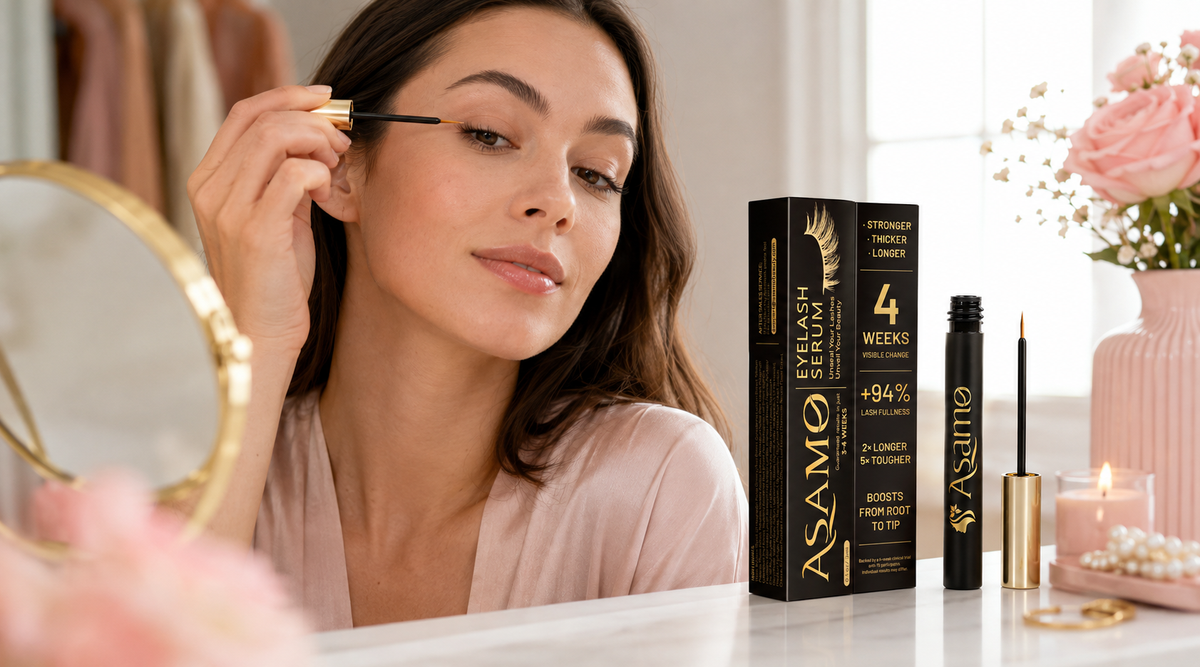
Choosing a lash serum is not only about a popular ingredient or a product name. A more useful approach starts with the experience you want: how the product feels, when you plan to use it, what comes next in your routine, and whether the packaging helps you apply it neatly.
The best choice is the one that matches the product label, the intended external application area, your existing makeup or skincare steps, and your personal comfort.
This article focuses on everyday cosmetic use, texture, layering, comfort, hygiene, and label reading. It does not diagnose conditions or promise treatment, permanent change, or a fixed timeline for results. Any ASAMO product-specific statement should be updated only after the final formula, directions, packaging, and finished-product testing are confirmed.
Quick Answer
Choose a lash serum based on your preferred texture, when you want to use it, what products you apply afterward, and how easy the packaging makes controlled application. Then confirm that choice against the real formula and label.
The right product should:
-
Be labeled for the intended external application area.
-
Have directions and warnings you understand.
-
Feel manageable in your morning or evening routine.
-
Work comfortably with nearby skincare and makeup.
-
Use packaging that supports clean, controlled application.
-
Make product-specific claims that match the available evidence.
A category name or a featured ingredient cannot replace the complete formula, product directions, and real-world routine fit.
Start With the Label
The label is the most useful place to begin. It should explain the intended application area, suggested frequency, precautions, and any instructions about use around the eyes.
Do not assume every lash serum should be used in the same place, with the same amount, or at the same time of day. A brush, felt tip, spoolie, or dropper may look familiar, but it does not determine the product’s approved directions.
If general advice online conflicts with the specific product label, follow the label.
For eye-area cosmetics, ingredient declarations, clear directions, and clean handling are especially important. FDA eye cosmetic safety guidance also advises consumers not to share eye cosmetics and to keep them clean.
Choose a Texture That Fits Your Routine
Texture changes how a serum spreads, settles, layers, and feels throughout the day. It does not automatically show that one product is stronger or more effective than another.
| Texture experience | May suit | What to consider |
|---|---|---|
| Lightweight liquid | People who prefer a minimal-feeling routine | Use a controlled amount to avoid movement or pooling |
| Serum-gel | People who want a little more cushion while applying | Check how it settles before mascara or nearby skincare |
| More conditioning feel | People who prefer an evening-focused routine | It may feel more noticeable under daytime makeup |
| Quick-set finish | People who wear makeup regularly | Confirm that the label permits morning use |
The most suitable texture is one you can use comfortably and consistently according to the label—not the one with the most dramatic product description.
Consider the Applicator Before You Buy
The applicator affects hygiene, precision, and how much product you are likely to use. It does not automatically determine where the product should be applied; always follow the label.
Fine Brush or Liner-Style Tip
A fine brush can help with controlled application to a narrow external area. It may be a practical choice for people who prefer precision.
Keep the brush clean, use a light hand, and avoid touching it to unclean surfaces. Do not assume that a liner-style applicator permits use on the inner waterline or in the eye.
Spoolie or Mascara-Style Wand
A spoolie-style applicator may feel familiar to people who regularly use mascara. It can distribute product along hairs, depending on the product’s directions.
Because this style may come into contact with lashes more broadly, clean handling and proper storage matter. Avoid sharing the product or using it after the applicator has touched an unclean surface.
Tube, Pump, or Dropper
Some products may use packaging that dispenses serum before a separate applicator or fingertip application. This can make it easier to control the initial amount, but it can also lead to over-dispensing if the product is poured or pumped out too quickly.
Use only the amount stated or implied by the label. Do not add extra product because the packaging dispenses more than you need.
Think About Morning vs. Evening Use
There is no fixed rule that every lash serum belongs in the morning or at night.
A morning product needs to fit around sunscreen, makeup, travel, and time. If the label allows morning use, look for a texture that settles comfortably before the next step. Use less rather than adding more layers, and wait until the surface is no longer visibly wet.
An evening routine may be easier if you wear mascara regularly or prefer a slightly more conditioning texture. After gently removing eye makeup and cleansing, apply the serum to the intended dry external area with clean hands.
If the label gives a specific schedule, follow it. Routine convenience does not override product directions.
Match the Serum to Your Makeup Habits
If you wear mascara often, choose a routine that leaves enough time for your lash serum to settle before makeup. There is no universal wait time; the right moment is when the product is no longer visibly wet, moving, or likely to mix into mascara.
To test compatibility:
-
Keep your usual morning routine the same.
-
Introduce only the new lash serum.
-
Use the smallest label-directed amount.
-
Let it settle naturally.
-
Apply mascara as usual.
-
Observe transfer, flaking, skipping, heaviness, or pilling.
If makeup performance changes, reduce the amount first. If the issue continues, simplify nearby products or move the serum to the evening if the label permits it.
Start With the Smallest Suitable Amount
Different packaging delivers different amounts. This is why there is no universal number of drops, pumps, or brush strokes for every lash serum.
Start with the least amount that allows neat coverage of the intended label-directed area. More product may create a wet layer that moves, transfers, pills, or feels heavy.
If the serum takes too long to settle, repeatedly reaches nearby areas, or makes mascara less reliable, reduce the amount before changing multiple steps in your routine.
Choose Based on Complete Formula Information
INCI lists can help you identify ingredients you prefer or want to avoid. However, they do not usually show exact concentration, formula stability, delivery system, packaging performance, or the finished product’s full cosmetic behavior.
For products sold to consumers in the United States, ingredients are generally listed in descending order of predominance, though ingredients at one percent or less may appear in any order. FDA cosmetic labeling guidance explains these requirements.
Use the full picture:
-
Ingredient list
-
Label directions
-
Product texture
-
Applicator type
-
Packaging and hygiene
-
Brand-provided finished-product evidence
-
Your real routine and comfort
Do not select a product solely because it highlights peptides, botanicals, caffeine, or another single ingredient.
Do Not Treat Feelings as Proof of Claims
A serum can feel silky, refreshing, lightweight, or conditioning. Those observations are useful because they help you decide whether the product fits your routine.
They do not automatically prove a specific biological effect, permanent result, or fixed timeline.
Keep three levels of information separate:
-
What the label says
Intended use, application area, directions, and warnings. -
What you can observe
Texture, dry-down, packaging convenience, makeup compatibility, and comfort. -
What needs product-specific support
Objective performance claims and any statement beyond ordinary cosmetic care and appearance.
This is the clearest way to compare products without turning a product category or one ingredient into a guarantee.

【Alt Text:A neutral comparison of lash serum applicators, textures, and controlled product amounts.】
Choose Packaging You Can Keep Clean
A convenient package is also one you can handle hygienically.
Before choosing, consider:
-
Can you close it securely after every use?
-
Is the applicator easy to keep away from unclean surfaces?
-
Does it dispense a controlled amount?
-
Is it practical for travel or daily storage?
-
Can you keep the original directions and warnings with the product?
Do not share eye-area products. Do not add water, saliva, mascara, or another cosmetic into the container. If the smell, color, or texture changes unusually, do not try to “fix” it by diluting or mixing it.
Reassess as Your Routine Changes
The right choice can change when your makeup habits, climate, travel schedule, or comfort level changes.
For example:
-
In humid weather, a richer layer may feel heavier.
-
In a dry indoor environment, your routine may feel different even when the formula has not changed.
-
When traveling, a simpler applicator and fewer steps may be more practical.
-
When you start wearing more makeup, evening use may become easier.
These observations do not prove that a formula has become stronger or weaker. They simply help you adjust the amount, timing, or surrounding steps while keeping the label directions the same.
How to Include ASAMO in Your Selection Process
ASAMO can position this topic as an educational guide rather than a guarantee-of-results sales page. Readers can first compare label information, texture, applicator type, and routine fit, then view the relevant collection or product page once the official pages are available.
A helpful choice checklist:
-
Confirm the exact intended application area.
-
Read the directions and warnings.
-
Consider whether you prefer morning or evening use.
-
Compare the texture with your usual makeup routine.
-
Look at the applicator and packaging for controlled, clean use.
-
Start with the smallest suitable amount.
-
Introduce one new product at a time.
ASAMO-specific descriptions must be checked against the current formula, packaging, label, and finished-product support before publication.

When to Stop Using a Product
Stop using the product if the label directs you to do so or if you experience persistent burning, clear swelling, significant redness, eye symptoms, or another concerning reaction.
Do not treat discomfort as an expected sign of performance. If symptoms are severe, persistent, or involve the eye, seek timely advice from an appropriate healthcare professional.
Frequently Asked Questions
How do I choose a lash serum?
Start with the label, intended application area, texture, applicator, packaging, and your existing routine. Choose a product you can use neatly and comfortably according to its directions.
Which lash serum applicator is best?
There is no universally best applicator. A fine brush may suit people who want precision, while a spoolie may suit people who prefer a familiar mascara-style format. The product label still determines proper application.
Should I choose a morning or evening lash serum?
Choose based on the label and your routine. A lightweight formula may fit better before makeup if allowed; an evening routine may be more convenient when you wear mascara daily.
Does a thicker texture mean a better lash serum?
No. Texture describes the sensory experience and layering behavior. It does not, by itself, prove quality or performance.
How much lash serum should I use?
Use the smallest label-directed amount that covers the intended external area neatly. If the product pools, moves, or takes too long to settle, use less.
Can I choose a lash serum based only on one ingredient?
No. A single ingredient does not reveal the full formula, concentration, stability, packaging performance, or finished-product behavior.

Final Takeaway
The best way to choose a lash serum is to start with the real product label, then compare texture, applicator type, packaging hygiene, routine timing, makeup compatibility, and personal comfort.
Do not let a category name, price, trend, or one featured ingredient make the decision for you. Select a product that can be used on the correct external area, in a clear routine, with a controlled amount—and reassess if your routine or comfort changes.
Share:
The Complete Lash Care Guide: Routine, Application, and Everyday Use
How to Travel With and Store Lash Serum