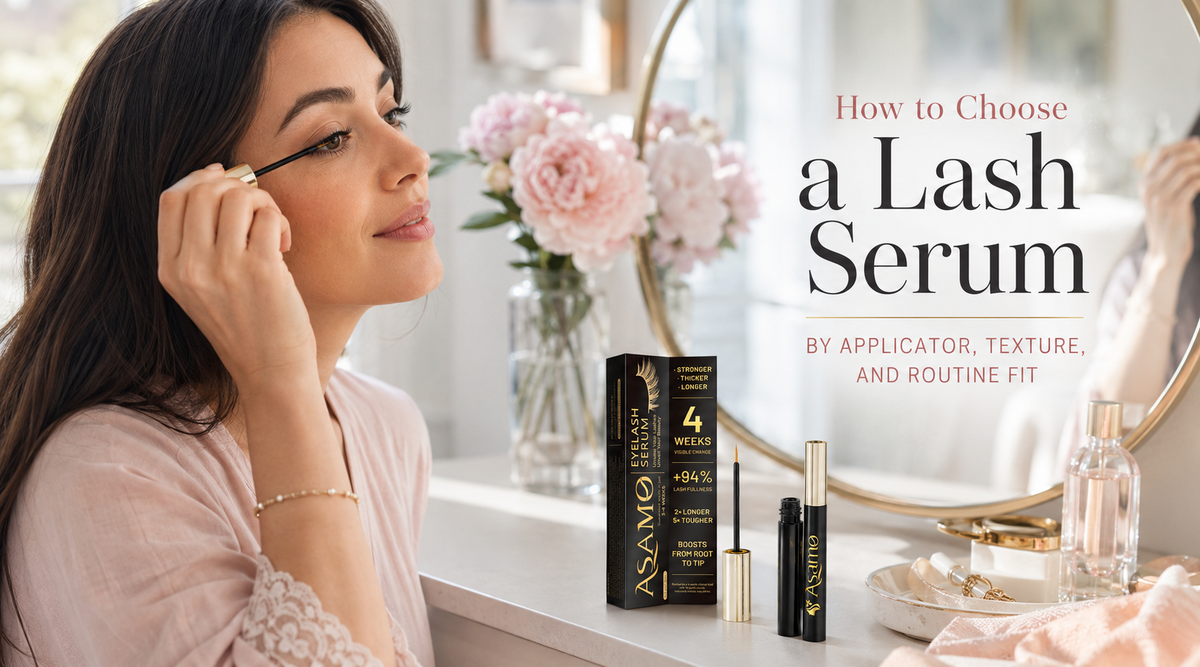
A “lash care routine” should not be about adding as many products as possible. The goal is simpler: each step should have a clear purpose, fit the product label, feel comfortable, and be easy to maintain.
Whether you use a lash serum alone or alongside eye cream, sunscreen, and mascara, the best routine is the one that keeps application controlled and avoids unnecessary layering around a sensitive area.
This article covers everyday cosmetic use, texture, order, comfort, hygiene, and label reading. It does not diagnose conditions or promise treatment, permanent change, or a fixed timeline for results. Any ASAMO product-specific statement should be updated only after the final formula, directions, packaging, and finished-product testing are confirmed.
Quick Answer
A complete lash care routine does not need many steps. It needs the right steps in a clear order:
-
Start with clean hands and a clean intended application area.
-
Follow the lash serum label for placement and amount.
-
Apply gently and only where the product is intended to go.
-
Wait until the serum is no longer visibly wet or mobile.
-
Continue with mascara or other routine steps only when the label and texture allow.
-
Stop using the product if you have persistent discomfort or concerning eye-area symptoms.
The correct routine depends on the product label, texture, makeup habits, and personal comfort—not on a universal internet rule.
Start With the Product Label
The most useful guide is the label on the specific product. It should tell you where to apply it, how often to use it, what precautions to follow, and whether it belongs in a morning or evening routine.
A product called “lash serum” is not automatically used in the same way as every other lash product. Do not rely only on the category name, brush shape, social-media instructions, or a single featured ingredient.
For eye-area cosmetics, the FDA advises consumers to keep products clean, avoid sharing them, and use them carefully around the eyes. Read FDA eye cosmetic safety guidance.
Keep Your Routine Purposeful
Every step should have a clear role. If two products perform the same practical function in the same area, using both may add thickness, transfer, or uncertainty without improving the routine.
Ask these questions before adding another step:
-
What is this product for in my routine?
-
Does its label allow use near the area where I plan to apply it?
-
Does it fit before or after the products I already use?
-
Does it make makeup more difficult to apply?
-
Can I tell whether it is comfortable on its own?
A routine that is short and repeatable is easier to evaluate than one with several new products introduced at once.
Start With a Small, Controlled Amount
More product is not automatically better. Excess lash serum may move, pool, feel overly wet, transfer into surrounding skincare, or interfere with mascara.
There is no universal number of drops or brush strokes because different applicators dispense different amounts. A fine brush, felt tip, spoolie, tube, pump, or dropper can all produce a different amount of product.
Start with the smallest label-directed amount that allows neat application to the intended external area. If the product drips, remains visibly wet for a long time, or causes repeat makeup transfer, use less before changing everything else.
Apply Gently
The eye area does not benefit from rubbing or pulling. Apply with a light hand and avoid repeatedly going over the same spot.
Use clean hands and a clean applicator. Apply only to the external location explicitly stated on the label. Do not intentionally place cosmetic lash serum in the eye or on the inner waterline unless the product’s own directions clearly permit it.
Burning, stinging, or noticeable redness should not be interpreted as proof that a product is “working.” If discomfort continues, stop using the product, review the label, and seek appropriate professional guidance when needed.
A Simple Morning Lash Care Routine
A morning routine has to work with time, sunscreen, makeup, and commuting. If your lash serum label permits morning use, keep the layers light.
A practical morning order may be:
Clean hands → label-directed lash serum → allow it to settle → sunscreen and face makeup → mascara
The exact order of eye-area skincare can vary with texture and instructions. Sunscreen should always be used according to its own label, including its application directions and intended coverage.
If mascara skips, flakes, or transfers after serum use, test one change at a time:
-
Use a smaller amount of serum.
-
Give the serum more time to settle.
-
Avoid touching or rubbing the area while it dries.
-
Move the serum to the evening if the label allows.
-
Simplify nearby products that create too many layers.
A Simple Evening Lash Care Routine
Evening may be easier for people who wear makeup daily because there is no mascara layer to manage.
A practical evening order may be:
Gently remove eye makeup → cleanse → dry the intended application area → clean hands → label-directed lash serum
Do not assume that evening use means you can apply extra product. Frequency and amount should still come from the product label.
Keep the rest of the routine simple when introducing a new serum. Adding several unfamiliar eye-area products on the same evening makes it difficult to identify the cause of pilling, dryness, or discomfort.
How Long Should You Wait?
There is no fixed waiting time that works for every lash serum. Formula texture, amount, humidity, temperature, and the next product all change how quickly a layer settles.
Instead of watching the clock, wait until the serum is no longer visibly wet, moving, or likely to mix with the next layer.
If it seems to take too long, reduce the amount or simplify the number of surrounding layers. A very thick application usually takes longer to settle and may be more likely to transfer.
What to Do if Products Pill or Roll Up
Pilling is usually a routine-compatibility issue. It may be related to using too much product, rubbing too much, layering conflicting textures, or moving to the next step before the first layer has settled.
Test one variable at a time:
-
Use less lash serum.
-
Apply with fewer passes.
-
Let the previous layer settle.
-
Reduce rubbing.
-
Adjust the order only if the product labels allow it.
Do not change every step at once. A simple test is more likely to show what actually caused the problem.

Use Eye Cream Carefully Alongside Lash Serum
A lash serum and an eye cream may appear in the same routine, but they should not be treated as interchangeable.
Follow each product’s label for its intended location. Apply them to their own designated external areas without forcing products into the lash line or eye.
If you are new to either product, introduce one first. Once it feels comfortable in your routine, add the other only if the labels allow it and the layers remain easy to manage.
If the combined routine feels heavy, transfers, or pills, simplify. You do not need to keep every step in every routine.
Keep Hygiene Simple
Good hygiene is part of an effective everyday routine.
-
Wash and dry your hands before application.
-
Keep the applicator and opening clean.
-
Close the product promptly after use.
-
Do not share eye-area products.
-
Keep the applicator away from unclean surfaces.
-
Do not add water, saliva, mascara, or another product into the container.
-
Do not use a product that has changed unusually in smell, color, or texture.
The FDA notes that improper handling of eye cosmetics can allow bacteria or fungi to grow in a product. FDA eye cosmetic safety guidance includes general guidance for keeping eye cosmetics clean.
Store Products Simply
Unless the label says otherwise, cosmetics are usually best stored in a cool, dry place away from direct sunlight and ongoing heat.
Keep the product in its original labeled container. Transferring it to an unmarked container can separate it from important directions, warnings, ingredient information, and batch details.
A bathroom may be convenient, but frequent heat and humidity changes can be less ideal for long-term storage.
Reassess When Your Routine Changes
Your routine may need adjustment during travel, seasonal changes, new makeup habits, or shifts in personal comfort.
Reassessing does not mean replacing every product. Start with the basics:
-
Is the amount still appropriate?
-
Are any steps repetitive?
-
Does the texture still work with your makeup?
-
Has the product label changed?
-
Is the product still comfortable to use?
Change one thing at a time so you can understand what improves the routine.
How to Include ASAMO in a Lash Care Routine
ASAMO can use this article as an educational starting point rather than a guarantee-of-results sales page. Readers should first understand routine order, application amount, label reading, and hygiene before being directed to a relevant collection or product page.
A simple ASAMO framework could be:
Morning, if the product label allows:
Clean hands → ASAMO lash serum as directed → allow to settle → sunscreen and makeup as directed by their own labels
Evening:
Remove eye makeup gently → cleanse → dry the intended area → apply ASAMO lash serum as directed → keep additional eye-area layers simple
ASAMO-specific claims, imagery, directions, and ingredient explanations should be checked against the current formula, final packaging, label, and finished-product support before publication.
 wing clean hands, controlled application, settling time, and the next routine step.】
When Should You Stop Using a Lash Product?
Stop using a product if its label directs you to do so or if you experience persistent burning, obvious swelling, significant redness, eye symptoms, or another concerning reaction.
Do not continue because online content suggests discomfort means the product is active. If symptoms are severe, persistent, or involve the eye, seek timely advice from an appropriate healthcare professional.
Frequently Asked Questions
What is the best lash care routine?
The best routine is not the longest one. It uses products only where their labels direct, keeps the amount controlled, allows layers to settle, and remains comfortable enough to follow consistently.
Should I use lash serum in the morning or at night?
Follow the product label. Morning may work when the texture settles well before makeup; evening may be easier when you want to avoid mascara layering.
How much lash serum should I use?
Use the smallest label-directed amount that covers the intended external area neatly. Do not treat more product as better.
How long should I wait before mascara?
Wait until the serum is no longer visibly wet or likely to move. There is no universal minute count for every formula.
Can I use lash serum with eye cream?
Possibly, if both products’ labels allow it. Apply each only to its intended external area and introduce products one at a time if you are new to them.
What should I do if my routine pills?
Reduce the amount, avoid rubbing, allow the first layer to settle, and change only one variable at a time.
Does stinging mean the product is working?
No. Stinging or burning is not evidence of performance. Stop use if discomfort persists or if you have a concerning reaction.

Final Takeaway
A complete lash care routine should be clear, controlled, and comfortable—not crowded. Start with clean hands, follow the exact product label, apply a small amount to the intended external area, and let layers settle before moving on.
Avoid treating category names or individual ingredients as guarantees. Build a simple routine, change one variable at a time, and stop using a product if you experience persistent or concerning discomfort.
Share:
Peptides in Lash Serum: A Label-Reading Guide
How to Choose a Lash Serum by Applicator, Texture, and Routine Fit