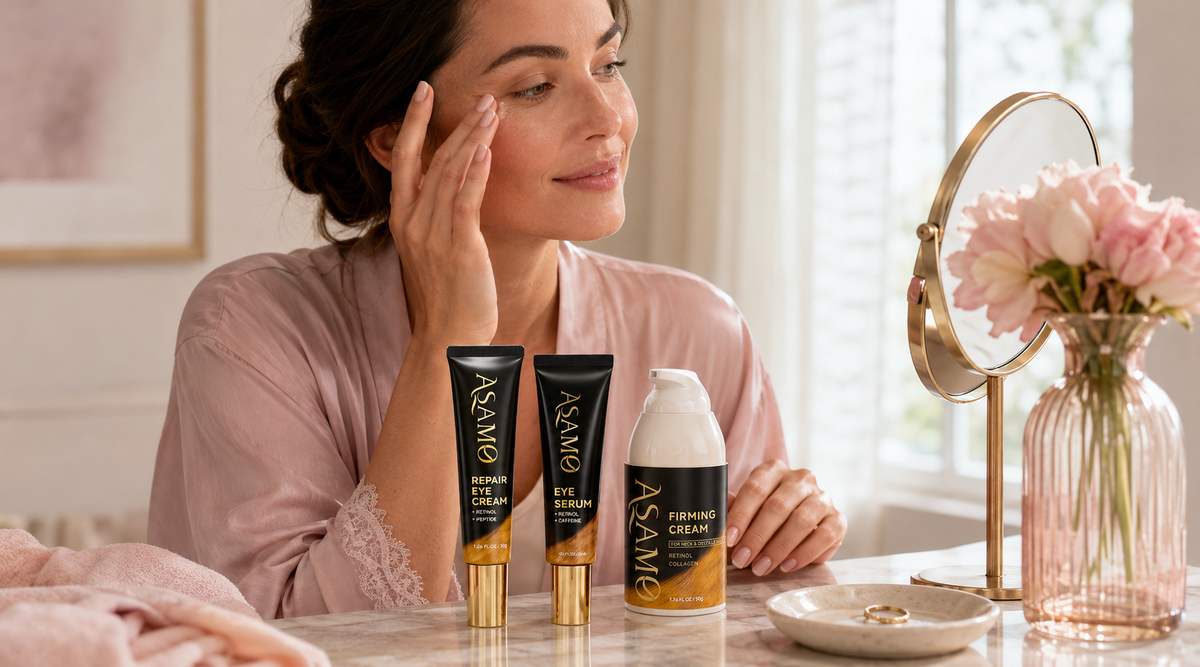
“How to introduce new skincare products” is a practical skincare question. When you buy several new products at once, it can be tempting to begin using all of them immediately. But if your skin feels uncomfortable, your routine starts pilling, or makeup begins to move, it becomes difficult to know which product—or which combination—changed the experience.
A more useful approach is to introduce one new product at a time while keeping the rest of your routine familiar. This makes it easier to observe texture, layering, comfort, and placement without treating your routine like a guess.
Any product used near the eyes or on sensitive-feeling skin should be used only as directed by its label. If you experience persistent stinging, marked redness, swelling, eye symptoms, or another concerning reaction, stop use and seek professional guidance as appropriate.
This guide focuses on everyday cosmetic use, product texture, layering, comfort, hygiene, and label reading. It does not diagnose skin conditions or promise treatment, permanent change, or fixed results. Any ASAMO product-specific wording should be updated only after the final formula, packaging, directions, and finished-product testing are confirmed.
Quick Answer
The simplest way to introduce a new skincare product is to keep your usual routine stable and add only one new item. Use it only in the area and frequency allowed by its label, begin with a small appropriate amount, and observe how it feels alongside your existing steps.
Do not introduce several unfamiliar products on the same day if you want to understand what changed. If discomfort, pilling, or makeup movement occurs, one new variable is much easier to evaluate than five.
Why One New Product at a Time Matters
A skincare routine is made of connected steps. A new serum can change how moisturizer applies. A richer cream can affect how sunscreen or makeup sits on top. A new eye-area product can feel different depending on where it is applied and what else is already in the routine.
When several products are introduced together, you may not know:
-
Which product caused a new sensation or discomfort
-
Which product is creating pilling
-
Which layer is making makeup shift
-
Whether the amount is too high
-
Whether two textures simply do not work well together
-
Whether a product is being used outside its labeled area
Introducing products one by one does not guarantee a particular result. It simply creates a clearer process for making routine decisions.
Begin With the Label
Before opening a new product, read the label rather than relying only on the category name or a featured ingredient.
Look for:
-
Intended area of use
-
Suggested frequency
-
Directions for application
-
Warnings and avoidance areas
-
Storage guidance
-
Whether the product is intended for morning, evening, or both
This step is especially important for products used near the eyes, lash line, neck, or other sensitive-feeling areas. Do not assume that a facial product can be used around the eyes, on eyelids, or near the inner eye simply because it has a light texture.
For general safety principles around eye cosmetics, you can refer to the FDA’s eye cosmetic safety guidance. Product-specific label directions should still come first.
Keep Your Baseline Routine Familiar
Before adding anything new, identify your baseline routine: the products you already use and understand.
A baseline does not need to be perfect. It simply needs to be familiar enough that you can notice a change.
For example:
| Time of day | Familiar baseline routine |
|---|---|
| Morning | Cleanse if needed, one familiar leave-on product if used, sunscreen according to its label |
| Evening | Gentle cleanse, familiar moisturizer or other label-appropriate leave-on product |
Once you have this baseline, add one new item without changing your cleanser, makeup, sunscreen, or other leave-on products at the same time.
If you replace three products at once, you will not know whether a difference comes from the new formula, a new texture combination, a different amount, or the total number of layers.
Choose One Clear Place for the New Product
Before testing a product, decide where it belongs in the routine based on its directions and actual texture.
“Lighter to richer” can be a helpful starting point, but it is not a universal rule. Labels and the way products feel in use should guide the final order.
| Product texture | Common routine consideration |
|---|---|
| Fluid or lightweight liquid | May be used earlier in a routine if the label allows. |
| Gel | May feel light but can pill if overapplied or rubbed repeatedly. |
| Lotion | Often works between lighter and richer textures. |
| Cream | May be more practical as a later step because it can leave a more substantial finish. |
| Balm-like product | May need to be used as a final layer, depending on label directions. |
Choose one routine position for the new product. Do not test it before moisturizer one day, after moisturizer the next day, and under makeup the following day if you are trying to understand how it behaves.
Start With the Smallest Appropriate Amount
There is no single number of pumps or drops that fits every product. Packaging varies, and a small amount from one dispenser can be much larger than from another.
Begin with the smallest label-appropriate amount that can be spread evenly across the intended area. More product does not automatically improve the experience.
Using too much can cause:
-
Excess slipping
-
A heavy or coated feeling
-
Transfer to clothing or hair
-
Pilling under later skincare, sunscreen, or makeup
-
Difficulty identifying whether the product itself is comfortable
Start small, then reassess only if the label directions and routine experience support a change.
Apply Gently and Avoid Excess Friction
Application technique affects layering. Repeated rubbing can disturb a product as it settles and may create pilling even when the formula itself is suitable.
Use clean hands. Place the product in the intended area, spread it with light movements, and stop once it is evenly distributed. There is no need to massage aggressively or keep rubbing until the surface feels completely dry.
Be especially gentle around the eye area, neck, and other delicate areas. Products should not enter the eye, touch the inner eyelid, or be applied to areas the product label does not allow.
Do not treat burning, stinging, or obvious redness as proof that a product is working. Persistent discomfort is a reason to stop and reassess.
Give the Product Time to Settle—Without Timing It Rigidly
There is no universal number of minutes to wait between skincare products. Formula, amount, humidity, temperature, and the next layer all affect how quickly a product settles.
A practical rule is to wait until the new product is:
-
Evenly spread
-
No longer visibly wet or running
-
Not gathering in lines or folds
-
Less likely to move around when you touch the surrounding area
If you need a very long waiting period to stop the routine from pilling, reduce the amount or number of layers before assuming that more waiting is the answer.
What to Observe When Introducing a New Product
You do not need to judge whether a product has delivered a dramatic result. Focus first on practical observations that help you decide whether it fits the routine.
| What to observe | Why it matters |
|---|---|
| Spreadability | Shows whether the amount and texture are manageable. |
| Surface feel | Helps you decide whether it feels too wet, heavy, sticky, or comfortable. |
| Layering | Shows whether the next product applies smoothly. |
| Pilling | May point to too much product, friction, or texture conflict. |
| Makeup compatibility | Matters for a daytime routine. |
| Clothing or hair transfer | Matters around the neck, chest, hairline, and jawline. |
| Persistent discomfort | A reason to stop use and follow the label. |
A short note in your phone can help. You do not need detailed tracking; “applied smoothly,” “pilled under sunscreen,” or “felt uncomfortable around the eyes” is enough to guide the next decision.
Do Not Add Multiple Unfamiliar Products on the Same Night
A crowded routine makes troubleshooting difficult. Even if each product seems gentle or familiar as a category, the combination may not be familiar to your skin or makeup routine.
Avoid adding multiple new products on the same evening, especially if they are intended for similar areas or create several leave-on layers. Instead, keep other steps stable and observe the new product in a simple routine.
This is particularly useful when:
-
You are trying a new texture for the first time
-
You regularly wear makeup or sunscreen
-
You are traveling or experiencing different weather
-
You are using a product near the eyes
-
Your routine already includes several leave-on steps
One product at a time creates a clearer answer than an all-at-once launch.
Morning Introduction: Keep It Light
Morning routines need to fit with sunscreen, makeup, commuting, weather, and limited time. A new product may feel comfortable at night but not work as well beneath your daytime products.
If the label allows morning use, keep the routine simple:
-
Start with your familiar cleansing approach.
-
Apply the new product in a small amount.
-
Let it settle until it is no longer obviously wet or mobile.
-
Add only the familiar steps you need.
-
Apply sunscreen according to its own label instructions.
If pilling or makeup movement occurs, do not add another product to correct it. First reduce the new product amount or test it in the evening instead, if the label allows.
Evening Introduction: Make It Easy to Observe
Evening may be a more practical time to introduce a new product because there is usually less interaction with makeup and daytime clothing. It can also be easier to keep the rest of the routine minimal.
A simple evening test might look like this:
-
Cleanse gently.
-
Apply the new product to the intended area.
-
Let it settle naturally.
-
Add one familiar moisturizer only if needed and label-appropriate.
Avoid using a new product with several other unfamiliar products in the same routine. Keep the routine brief enough that you can observe how the new product feels and layers.
If Pilling Happens, Change Only One Variable
Pilling usually relates to texture compatibility, amount, friction, layering, or settling time. It is not proof that a product is “activating” or working more effectively.
If your new product pills, test one change at a time.
| Possible issue | First test |
|---|---|
| Too much product | Use a smaller amount. |
| Too much rubbing | Apply with fewer, gentler passes. |
| Too many leave-on layers | Remove one nonessential familiar layer. |
| Product still feels very wet | Let it settle briefly before the next step. |
| Pilling under sunscreen or makeup | Keep the rest of the morning routine lighter. |
| Pilling near clothing or hair | Use less around friction points. |
Do not change the product amount, routine order, cleanser, sunscreen, and makeup at the same time. A single adjustment tells you more.

Separate Comfort From Product Claims
A product may feel cooling, smooth, rich, light, or silky. These are useful observations about texture and experience. They are not automatic proof of a particular biological effect.
When introducing a new product, keep these levels separate:
-
What the label clearly says
-
What you can observe about texture, placement, and layering
-
What claims require specific finished-product evidence
Cosmetic content can discuss appearance, finish, moisturizing feel, and routine use. It should not turn sensory experience into claims about treating conditions, permanently changing skin structure, or guaranteeing a result.
Read the Full Formula, Not Only the Featured Ingredient
An ingredient list can help you identify ingredients you prefer or want to avoid. However, one featured ingredient does not show exact concentration, stability, formula design, or the finished product’s performance in your routine.
When considering a new product, look at:
-
The full INCI ingredient list
-
Label directions and warnings
-
Intended use area
-
Packaging type
-
Texture
-
How it fits with your existing products
-
Evidence behind any specific claim
A product does not need the longest ingredient list or the most featured ingredients to deserve a place in your routine.
Packaging and Storage Affect Your Test
Packaging influences amount and hygiene. Pumps, tubes, jars, droppers, and applicators can dispense different quantities, so learn how your specific package works before deciding that you need more.
Keep the opening and applicator clean, close the product promptly after use, and do not allow applicators to touch unclean surfaces. Do not add water, saliva, or other cosmetics to change a product’s texture.
Unless the label says otherwise, store products in a cool, dry place away from direct sunlight and prolonged heat. Do not transfer them to unmarked containers that remove their directions, warnings, ingredients, or batch information.
When to Stop Instead of Continuing the Test
Introducing a new product does not mean you should continue through discomfort. Do not keep testing a product just to see whether irritation will pass.
Stop use if you notice:
-
Persistent stinging or burning
-
Marked redness
-
Obvious swelling
-
Eye symptoms
-
A reaction that feels concerning to you
Cleanse or rinse as appropriate, check the label, and seek professional guidance when needed. If symptoms are severe or involve the eyes, seek timely professional help.
How ASAMO Can Fit Into This Approach
ASAMO can use this topic as an educational guide that helps consumers build a clearer, more manageable routine. The message should not be that consumers need every product at once. It should be that product labels, appropriate amount, correct placement, and comfort matter when adding any new step.
Any product-specific ASAMO wording should be confirmed against the final formula, packaging, directions, and finished-product evidence. Collection or product links should only be added after the real destination pages are live.

Frequently Asked Questions
How should I introduce a new skincare product?
Keep your usual routine stable and add only one new product. Follow its label, use a small appropriate amount, and observe how it spreads, feels, and layers with your familiar steps.
Can I start several new skincare products at once?
You can, but it makes it much harder to identify the reason for pilling, discomfort, makeup movement, or other changes. One new product at a time is easier to evaluate.
How long should I wait before adding another new product?
There is no fixed universal schedule. Give yourself enough time to understand how the first product fits into your routine before introducing another variable.
Should I test a new product in the morning or at night?
Follow the label. If the product can be used at either time, evening may be easier for observing texture because there is usually less interaction with sunscreen and makeup.
What if the new product pills?
Use less, apply with less friction, and test it with fewer surrounding layers. Change only one variable at a time so you can identify the cause.
What if I use a product near my eyes?
Use it only in the area clearly allowed by the label. Keep it out of the eyes and avoid the inner eyelid or waterline unless the product specifically instructs otherwise.
When should I stop using a new product?
Stop use if you experience persistent burning, marked redness, obvious swelling, eye symptoms, or another concerning reaction. Follow the label and seek professional guidance as appropriate.

The Takeaway
The best way to introduce a new skincare product is not to build a completely new routine overnight. Keep your familiar steps stable, add one product, follow its label, begin with a small appropriate amount, and observe comfort and layering.
If the routine pills, feels heavy, or causes persistent discomfort, simplify rather than adding more products. One clear change at a time gives you the most useful information about what belongs in your routine.
ASAMO should update product-specific wording only after the final formula, testing materials, label directions, packaging, and live URLs are confirmed.
Share:
Are You Using Too Many Skincare Products?
How to Build a Minimal Travel Skincare Routine